NWA Storm Damage: What Homeowners Need to Know
A storm is over in minutes, but what you do in the next two days and the next two years decides how well your roof and your claim hold up.
September 30, 2026 · 4 min read
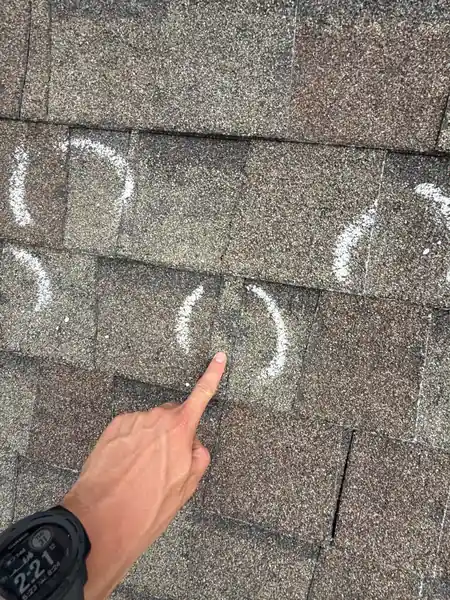
Northwest Arkansas gets its share of severe weather. Hail in the spring, straight-line winds through storm season, and the occasional tornado all land on the same place first: your roof. The trouble is that a roof can take a real beating and still look fine from the driveway. Hail bruises shingles, strips granules and cracks the mat underneath, and the water that follows often does not show up for weeks.
Signs of hail damage
Hail damage is easy to miss because the roof usually stays in one piece. Here is what shows up after a hailstorm:
- Dark, soft spots or bruising on the shingles, where the impact crushed the surface.
- Granule loss, often visible as loose grit in your gutters or at the bottom of your downspouts after a storm.
- Dented gutters, downspouts or metal vent covers. If those took a hit, the roof surface probably took the same one.
- Cracked or split shingles with the underlayment showing through.
Signs of wind damage
High wind finds every weak point on a roof. It lifts shingle edges, tears shingles off outright and works flashing loose at valleys and roof edges. Walk the yard after a storm and look for these:
- Missing shingles, or shingles that are visibly lifted at the edges.
- Exposed nail heads or bare underlayment where shingles have torn away.
- Flashing that is bent, lifted or missing at valleys and along the roof edge.
- Debris in the gutters, such as tree limbs or shingle granules.
The first 48 hours
Your priority right after a storm is safety, then stopping any water that is actively getting in. Stay off the roof. Wet shingles and loose debris make it dangerous, and you can do more harm than good walking on damaged material. Here is a practical order of operations:
- Walk the property from the ground. Look at the roof line, the gutters, the downspouts and the yard for shingles, granules or debris.
- Go into the attic and look at the ceilings with a flashlight. Stains, damp insulation or daylight where there should not be any all tell you something.
- Take photos of everything before you clean anything up, including any interior water marks.
- If water is coming in, call for emergency tarping. Keep receipts for any temporary protection, and ask your insurance company what they reimburse.
Why emergency tarping comes first
A tarp is not a repair. It is fast, temporary protection that stops water intrusion right after damage happens, so the problem does not spread while repairs get scheduled. When a limb comes through the roof or high wind tears shingles off and leaves an opening, a properly secured tarp keeps the ceiling, insulation and framing from getting soaked in the meantime.
Midcon Exteriors tarps day or night. It is the same first step that opens our full storm damage process, and it does not commit you to anything beyond getting the roof covered.
Document before anyone else does
A good inspection is not just someone climbing a ladder and giving you a number. It is a written record. When our team does a complimentary evaluation, we bring the equipment to safely inspect the roof, photograph and video the damaged materials, check weather data and validate that the damage is actually weather related. Then you get a detailed report with photos and a game plan for repair options.
That record matters when your insurance company sends an adjuster. Adjusters are on your side, but they move quickly through a lot of properties and can miss claim-worthy damage that is not obvious from a quick walk. We meet the adjuster on site with our own findings and recommended repair scope, so you are considered for everything that was actually damaged, not just what is easy to spot. It costs nothing extra.
The Arkansas two-year window
In Arkansas, you have two years from the original loss date to file a claim. After that, you lose the option entirely. That sounds like plenty of time, but storms blur together, damage gets worse, and homeowners often wait to see if a small leak goes away. It will not.
A word about deductibles
At some point a neighbor, a friend or even another contractor will tell you they can get your deductible waived. Midcon will not do that. Waiving or absorbing a deductible to make a claim look free means committing insurance fraud, and we will not ask any customer to take part in it. What we will do is help you file the claim, give your insurance company the documentation it needs and be honest about what we see.
That honesty goes both ways. We do not push unnecessary claims. If our assessment says you do not need a replacement, we will tell you so, and we will tell you when to start planning for one.
What to do next
If your Northwest Arkansas home has been through a hailstorm or a windy night and you are not sure what happened up there, the simplest next step is a free inspection. Our Lowell team will walk the roof, document what we find with photos and give you a straight answer, even if that answer is that you are fine for now. If there is legitimate storm damage, we will walk you through the claim from start to finish.
The takeaway: after a storm, document early, protect the house from more water and get a written inspection well inside the two-year claim window.
Midcon Exteriors, (479) 308-5763
Call (479) 308-5763More articles
Roofing FAQs: Your Top Questions Answered
Real answers on cost, claims, materials, financing and cleanup, from a Lowell roofing crew that gets these questions every week.
Expert Insights on Roofing NWA FAQs: Clear Answers
Picking a roofer is mostly a matter of knowing what to ask, and here is a checklist you can use before you sign anything.